
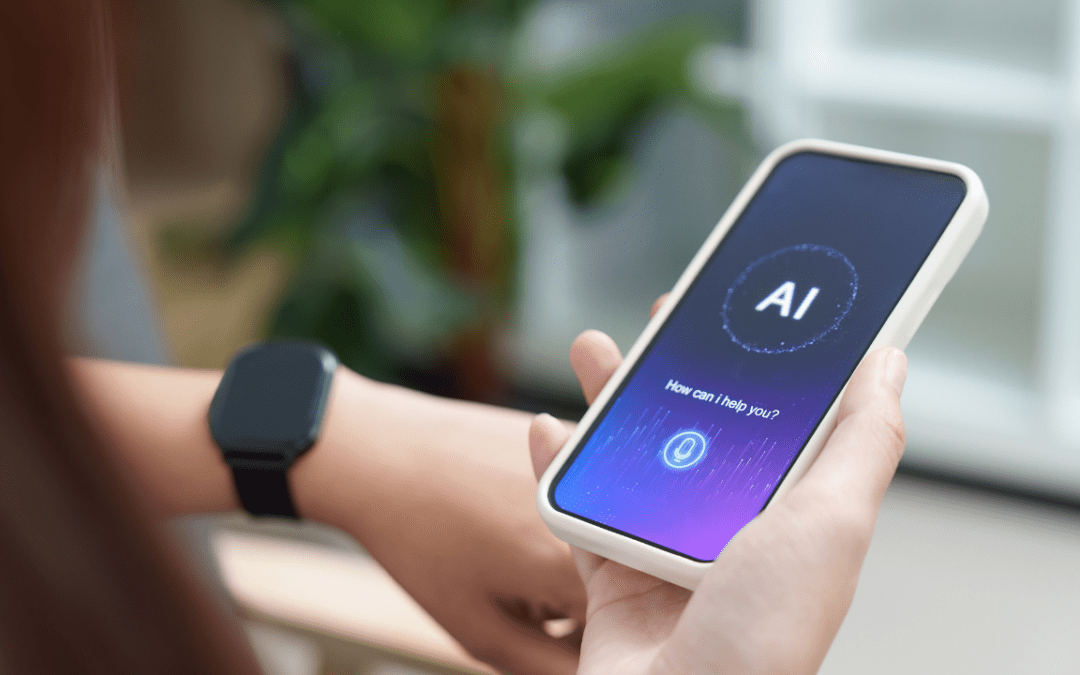
You’ve probably tried it. Typed something vulnerable into a chatbot late at night when you didn’t want to bother anyone. Maybe it felt surprisingly good in the moment. Maybe the response was warm and thoughtful and said something that landed. Maybe you thought, okay, this might actually work.
And in that moment, it kind of did. That’s the honest starting point. AI can produce responses that feel supportive. It can reflect things back to you in ways that feel seen. It can offer information, frameworks, coping strategies, and a kind of patience that never runs out. For certain things, in certain moments, that has genuine value.
But there’s a difference between something feeling helpful and something being therapy. And that difference matters enormously when the stakes are your mental health.
The question of can AI be a therapist is not really a technology question. It’s a question about what therapy actually is, what it does, and why it works. Because if you understand that clearly, the answer becomes less about what AI can generate and more about what human beings fundamentally need from each other in order to heal.
Can AI Actually Replace a Real Therapist?
No. And the reason goes deeper than the obvious practical limitations.
Yes, AI lacks licensure. Yes, it can’t be held accountable the way a licensed clinician can. Yes, it isn’t bound by the ethical frameworks that govern therapeutic relationships. Yes, your conversations with most AI tools are not protected the way conversations with a therapist are. These things matter and they’re worth knowing.
But the more fundamental answer to can AI be a therapist is this: therapy doesn’t work primarily because of the information or techniques it delivers. It works because of the relationship.
Decades of research on therapeutic outcomes point to the same conclusion consistently. The single strongest predictor of whether therapy helps someone is the quality of the therapeutic alliance, the relationship between therapist and client. Feeling genuinely known by another human being. Having someone track your story over time. Being in a relationship where another person is ethically and professionally committed to your wellbeing. These are not decorative features of therapy. They are the mechanism through which change happens.
AI cannot form a relationship with you. It can simulate one. It can generate responses that feel relational. But there is nobody on the other side. No one is actually moved by what you share. No one carries you with them when the conversation ends. No one is there in any real sense at all.
That’s not a criticism of the technology. It’s just an honest description of what it is. And when you understand what therapy actually works through, you understand why no language model, however sophisticated, can replicate it.
What Can AI Help With, and What Can’t It Do?
This is where the picture gets more nuanced, because a flat dismissal of all AI mental health tools isn’t accurate or useful.
What AI can genuinely help with:
Psychoeducation. Understanding what anxiety is, how depression affects cognition, what a panic attack involves physiologically, what different therapy modalities actually do. AI can deliver this kind of information clearly and accessibly, and being informed about your own mental health is genuinely useful.
Basic coping strategies. Breathing techniques, grounding exercises, sleep hygiene, behavioral activation strategies. These are structured, learnable tools. AI can walk you through them. For mild, situational distress, this can provide real relief.
Journaling and reflection prompts. Having a structured space to process thoughts, track patterns, and articulate what you’re experiencing has value. AI can provide that structure in a low-barrier way.
A bridge when nothing else is available. If you’re on a waitlist, if it’s 2am, if accessing a real therapist isn’t currently possible, AI support is better than no support for mild to moderate issues. As a temporary measure, it fills a gap.
What AI cannot do:
It cannot actually understand you. It processes your words and generates contextually appropriate responses. That is not the same as comprehension, and it is not the same as being known.
It cannot track your story with continuity and meaning. A therapist holds your history, notices patterns across months, connects what you said in week three to what you’re saying in week thirty. AI has no real memory and no real investment.
It cannot recognize what you’re not saying. A skilled therapist reads body language, tone, hesitation, what gets avoided. They notice the thing you almost said and didn’t. None of that is available to AI.
It cannot handle complexity and crisis. Trauma, personality disorders, suicidal ideation, psychosis, complex grief, relational wounds. These require clinical judgment, human attunement, and the capacity for genuine ethical responsibility. Can AI be a therapist for someone in serious crisis? Absolutely not, and it can actively cause harm by creating the illusion of support where real intervention is needed.
Why Doesn’t AI Feel the Same as Talking to a Person?
Because something in you already knows the difference, even when the words look similar on a screen.
When you talk to a real therapist, you are in a relationship with another human nervous system. They are regulated or dysregulated. They respond to you in real time with their whole history of being a person who has suffered, healed, and learned. Their presence is actual. There is genuine contact happening, even across the professional boundary of a therapy room.
When you talk to AI, you are alone with a very sophisticated mirror. The reflection can be accurate and even illuminating. But there is no one there looking back.
This matters because so much of what needs to heal in people has been wounded in relationship. Attachment injuries, shame, the deep belief that you are too much or not enough or fundamentally unlovable. These things were learned through experiences with other people. They cannot fully heal in isolation from people, no matter how sophisticated the tool you’re using.
There’s also something that happens in the room with a real therapist that is almost impossible to articulate but very easy to feel. The experience of saying something out loud that you have never said before, to a real person, and having them stay. Not leave. Not judge. Not fall apart. Stay. That experience is reparative in a way that typing into a text box simply isn’t.
Can AI be a therapist in that sense? The question almost answers itself. The healing that comes from being witnessed by another human being requires another human being.
How Do I Know If I Need Real Therapy Instead of AI Support?
There are some clear signals worth taking seriously.
Your distress has been going on for more than a few weeks and isn’t connected to a single identifiable stressor that has since resolved. Persistent symptoms, low mood, anxiety that follows you, patterns you keep repeating, these don’t shift on their own.
It’s affecting your functioning. Your relationships, your work, your ability to do the basic things that make up a life. When mental health starts costing you in concrete ways, that’s the threshold.
You’ve experienced trauma. Full stop. AI is not equipped for trauma work. Trauma requires a trained clinician, a safe relational container, and often specific therapeutic modalities like EMDR or somatic approaches. Using AI to process trauma is not only insufficient, it can be actively destabilizing.
You’re having thoughts of self-harm or suicide. This is not a situation for any AI tool. This is a situation for a real person, a crisis line, an emergency service, or a trained clinician.
You feel like you’re managing but you’re not actually okay. This is perhaps the subtlest signal and the one most worth trusting. Functioning isn’t the same as thriving. If you’ve been holding it together in ways that feel unsustainable, if you’re tired in the way the mental load piece described, if something underneath the surface feels like it needs actual attention, that instinct is worth following.
Can AI be a therapist for any of these situations?
No. And trying to make it work that way isn’t a solution. It’s a delay.
Here’s the real issue underneath all of this. People turn to AI for mental health support for the same reason they doomscroll and the same reason they run on empty without asking for help. Because the real thing feels inaccessible, too expensive, too far away, too much to ask for.
That’s a legitimate systemic problem. Waitlists are long. Costs are real. Access is genuinely unequal. AI tools exist in that gap and they fill part of it. That’s not nothing.
But you deserve more than a gap-filler. You deserve actual support, from a real person, who can actually see you. If real therapy feels out of reach right now, keep looking. Use the AI tools as a bridge, not a destination. Because what you actually need, what most people who are struggling actually need, is not a better algorithm. It’s genuine human connection. And that still can’t be automated.