
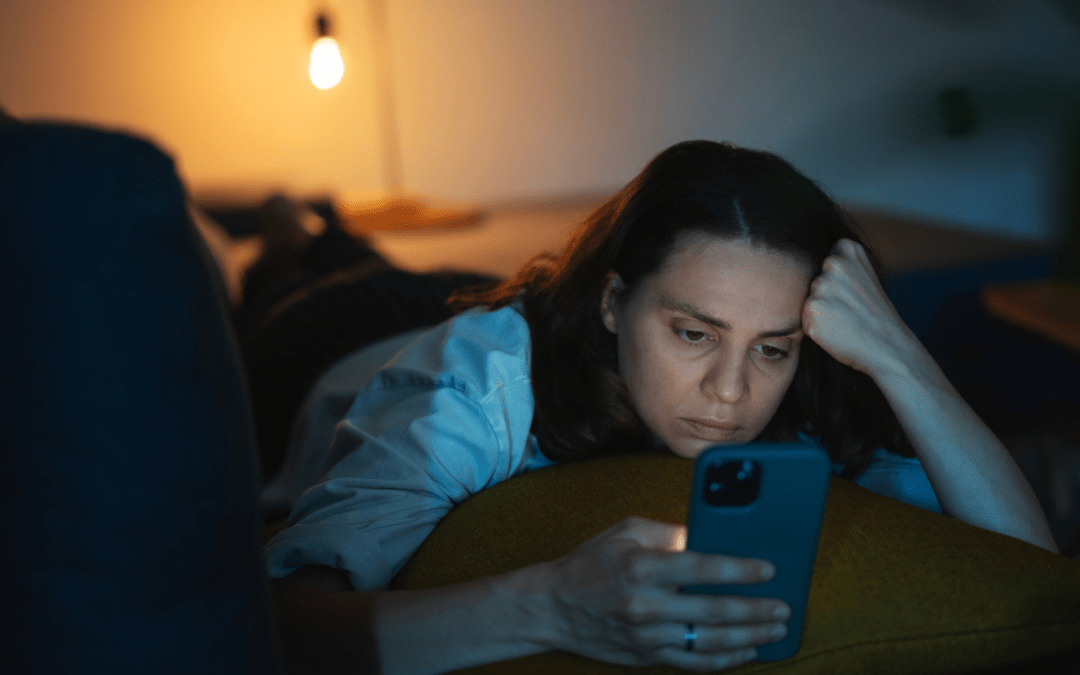
You open your phone to check one thing. Forty minutes later, you’re reading about a natural disaster on the other side of the world, a political crisis you can’t influence, and three opinion pieces about why everything is getting worse. You feel terrible. But you keep scrolling.
This is doomscrolling. And if you’re doing it, you’re not broken or weak or uniquely anxious. You’re doing exactly what the apps were designed to make you do. The question isn’t whether you’re susceptible to it. The question is what you actually do about it.
Because here’s the tension most people feel: they want to know how to stop doomscrolling, but they also don’t want to be the person who has no idea what’s happening in the world. They don’t want to be uninformed. They don’t want to check out entirely. They just want to stop feeling like every news cycle is slowly dismantling their nervous system.
That’s a real and reasonable thing to want.
And it’s actually achievable. But it requires being honest about what staying informed actually means, and what it’s costing you when you do it the way most people currently do.
How Do You Stop Yourself From Doomscrolling?
The first thing to understand about how to stop doomscrolling is that willpower alone won’t do it. You can’t out-discipline an app that has thousands of engineers working to keep you engaged. Trying to just “scroll less” using sheer self-control is like trying to eat less sugar while keeping a candy bowl on your desk. The environment has to change.
Practical things that actually work:
Remove the apps from your home screen. Not delete them. Just move them. The friction of having to search for an app is small, but it’s enough to interrupt the automatic, mindless tap-and-scroll behavior. You want to make checking the news a deliberate choice, not a reflex.
Charge your phone outside your bedroom. Doomscrolling at night is particularly damaging. The combination of blue light, emotional content, and lying still in the dark is a recipe for anxiety and poor sleep. The bedroom boundary is one of the highest-impact changes you can make.
Turn off push notifications for news apps. Every notification is an invitation to re-engage. Breaking news alerts are designed to feel urgent, even when nothing about them requires your immediate attention. You don’t need to know something the second it happens. You need to know it when you’re in a state to actually process it.
Create a physical replacement habit. When the urge to scroll hits, your brain is usually looking for stimulation or distraction, not actually information. Having something physical to do instead, getting up, making a drink, going outside for five minutes, gives that impulse somewhere else to go.
The key insight in how to stop doomscrolling is this: you’re not fighting information, you’re fighting a behavioral loop. Treat it like one.
How Much News Is Too Much for My Mental Health?
Research suggests that more than thirty minutes of news consumption per day starts to negatively affect mental health for most people. For people who are already dealing with anxiety, depression, or trauma, that threshold can be significantly lower.
But it’s not just about time. It’s about context and format.
Watching video news, particularly footage of violence, disasters, or conflict, activates the stress response more intensely than reading the same information. Social media news consumption is worse than structured news consumption because of the way the algorithm mixes emotionally provocative content with no editorial judgment about quantity or pacing.
Some signs that you’ve crossed your threshold:
You feel a low-level sense of dread that follows you through the day. You find yourself thinking about news stories you read hours ago. You feel helpless or hopeless in ways that seem connected to what you’re reading. You’re losing sleep. You feel irritable or emotionally raw after scrolling. You’re having trouble being present with people you care about because part of your attention is elsewhere.
These are not signs that the news is too bad to handle. They’re signs that your nervous system is overwhelmed and your consumption pattern needs to change. Knowing how to stop doomscrolling isn’t just a productivity hack. For many people, it’s a genuine mental health intervention.
How Can I Stay Informed Without Feeling Anxious or Overwhelmed?
This is the question most people actually want answered. Because “just stop reading the news” isn’t realistic advice for adults who care about the world.
The answer is to shift from passive consumption to intentional consumption.
Choose specific, scheduled times to check the news. Once in the morning, after you’ve been awake for at least thirty minutes and had something to eat. Once in the early afternoon if needed. Not at night. Not first thing when you wake up. Not in the space between every other activity. Time-boxing your news consumption means you’re choosing when to engage, rather than being pulled in constantly.
Pick one or two reliable sources and stop there. The algorithmic feed is designed to maximize your time on the platform, not to give you a balanced or accurate picture of the world. A good newspaper, a newsletter you trust, a radio news summary: these formats have editorial judgment baked in. Someone has already made decisions about what’s important and what isn’t. That structure is protective.
Distinguish between information and anxiety content. Some news gives you information you can actually use or act on. Local news about your community. Information relevant to decisions you need to make. Civic information about elections or policy that affects you directly. Other news is just exposure to suffering you can’t affect. You don’t have to consume the second category to be an informed person.
Actively seek out constructive journalism. Outlets focused on solutions, progress, and what’s actually working exist. The world isn’t only getting worse. But the algorithm will never show you that because good news doesn’t drive engagement. You have to go looking for balance deliberately.
What Are Simple Ways to Break the Doomscrolling Habit?
If you’re looking for practical, low-effort ways to start shifting the habit today, here’s what the research and clinical experience actually support:
Set a screen time limit on news and social media apps. Most phones have this built in. When the limit is reached, the app locks. You can override it, but again, friction is the point.
Use grayscale mode on your phone during certain hours. Color is part of what makes screens compelling. Grayscale is genuinely less stimulating and makes phones less appealing to pick up compulsively.
Do a news fast for one week. Not forever. Just seven days. Most people who try this report that their baseline anxiety drops noticeably within a few days, and they discover that the things they actually need to know still reach them through other people and conversations.
Replace the scroll with something that meets the same underlying need. Doomscrolling is often about anxiety management, not information. You’re checking because checking feels like doing something. Journaling, exercise, talking to someone, all of these manage anxiety more effectively and don’t leave you feeling worse afterward.
Tell someone what you’re doing. Behavioral change is more likely to stick when someone else knows about it. Even saying to a friend or partner “I’m trying to stop scrolling the news at night” creates a small but real layer of accountability.
The deeper issue here is the same one that drives people toward AI therapists and other digital substitutes for real human experiences. When anxiety is high and coping strategies are low, we reach for whatever is available and immediate. Doomscrolling feels like it’s doing something. It feels like staying connected, staying alert, staying prepared.
But it’s not. It’s anxiety feeding anxiety, in a loop that the apps are specifically designed to keep going.
Learning how to stop doomscrolling is ultimately about reclaiming the difference between being informed and being overwhelmed. You can know what’s happening in the world. You can care about it. You can act on it in whatever ways are available to you.
And you can do all of that without letting an algorithm decide how much suffering you’re exposed to and when.
If the anxiety that drives your doomscrolling feels bigger than a habit change can address, that’s worth talking to someone about. Not an app. A person. Because some things the algorithm really can’t fix. Annapolis Counseling Center is here.